Distribution Of Military Power In Eu Countries
From the PlotGPT AI Reports
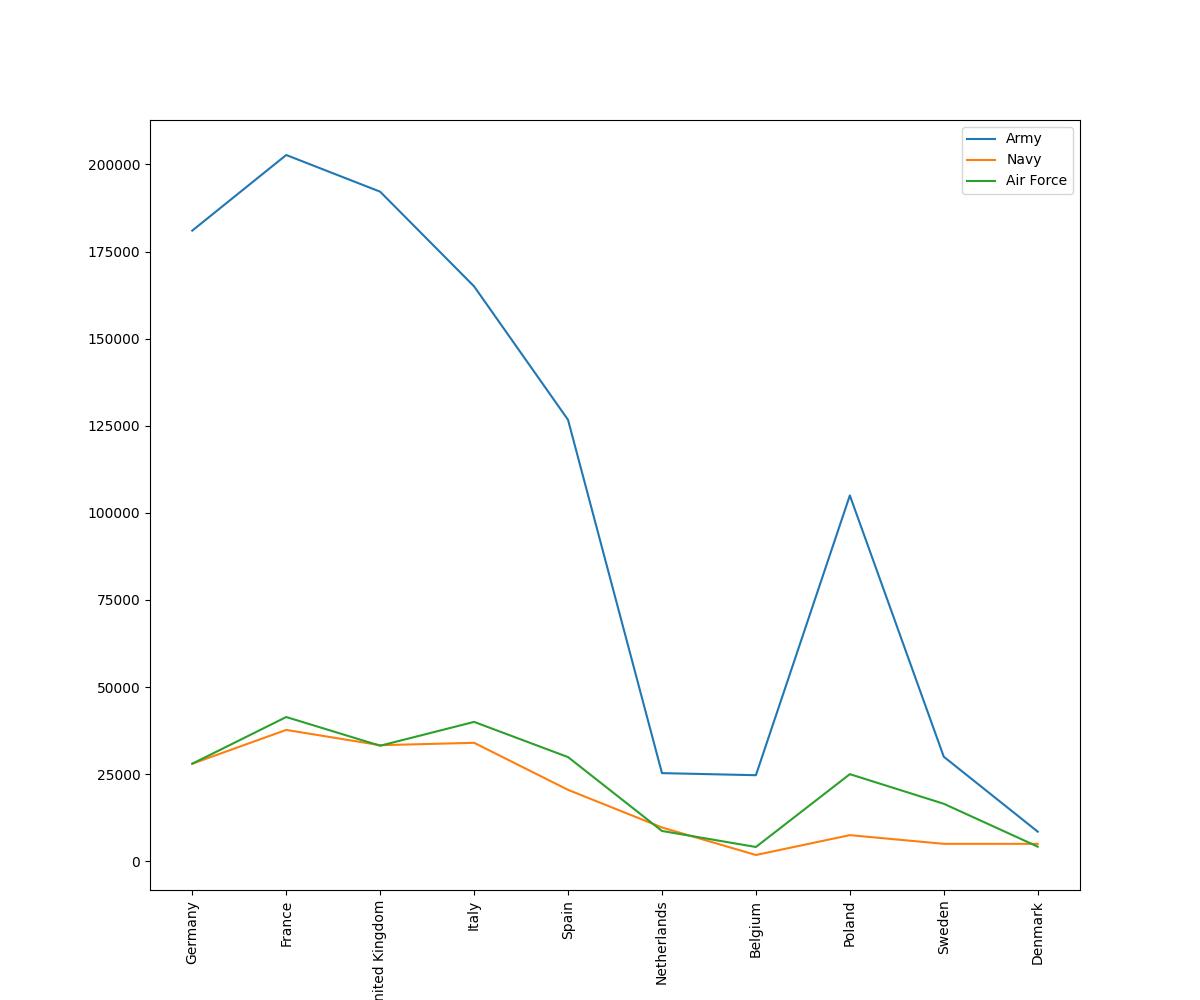
Here is an example of a Python dictionary with a parsable JSON format of the distribution of military power in EU countries: ```python import json military_power = { "Germany": { "Army": 181000, "Navy": 28000, "Air Force": 28000 }, "France": { "Army": 202700, "Navy": 37700, "Air Force": 41400 }, "United Kingdom": { "Army": 192170, "Navy": 33310, "Air Force": 33160 }, "Italy": { "Army": 165000, "Navy": 34000, "Air Force": 40000 }, "Spain": { "Army": 126700, "Navy": 20500, "Air Force": 29900 }, "Netherlands": { "Army": 25300, "Navy": 9700, "Air Force": 8700 }, "Belgium": { "Army": 24700, "Navy": 1800, "Air Force": 4100 }, "Poland": { "Army": 105000, "Navy": 7500, "Air Force": 25000 }, "Sweden": { "Army": 30000, "Navy": 5000, "Air Force": 16500 }, "Denmark": { "Army": 8500, "Navy": 5000, "Air Force": 4200 } } # Convert dictionary to JSON string json_data = json.dumps(military_power, indent=4) print(json_data) ``` The above code defines a Python dictionary `military_power` where each key represents an EU country, and the corresponding value is another dictionary containing the distribution of military power in terms of the number of personnel in the Army, Navy, and Air Force. The `json.dumps()` function is then used to convert the dictionary into a JSON-formatted string, with the `indent` parameter set to 4 to provide a formatted output. Finally, printing the `json_data` will display the JSON string representing the military power distribution.