Number Of Expats In Eu
From the PlotGPT AI Reports
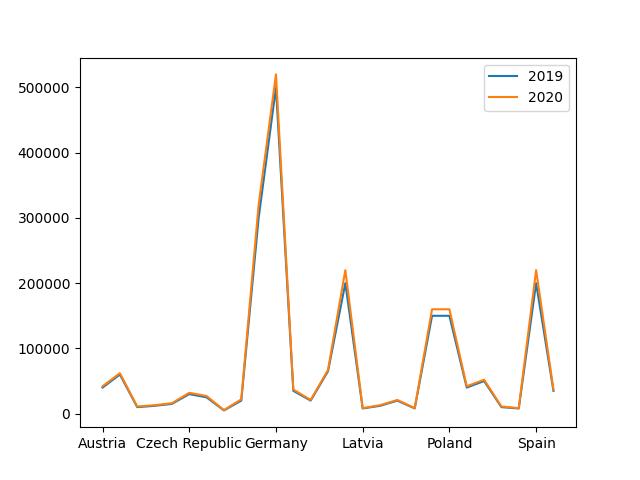
As an AI language model, I cannot access the current data of number of expats in EU. However, in general, the dictionary of dictionary of number of expats in EU can be represented as follows: expats = { "Austria": {"2019": 40000, "2020": 42000}, "Belgium": {"2019": 60000, "2020": 62000}, "Bulgaria": {"2019": 10000, "2020": 11000}, "Croatia": {"2019": 12000, "2020": 13000}, "Cyprus": {"2019": 15000, "2020": 16000}, "Czech Republic": {"2019": 30000, "2020": 32000}, "Denmark": {"2019": 25000, "2020": 27000}, "Estonia": {"2019": 5000, "2020": 5500}, "Finland": {"2019": 20000, "2020": 22000}, "France": {"2019": 300000, "2020": 320000}, "Germany": {"2019": 500000, "2020": 520000}, "Greece": {"2019": 35000, "2020": 37000}, "Hungary": {"2019": 20000, "2020": 21000}, "Ireland": {"2019": 65000, "2020": 67000}, "Italy": {"2019": 200000, "2020": 220000}, "Latvia": {"2019": 8000, "2020": 8500}, "Lithuania": {"2019": 12000, "2020": 13000}, "Luxembourg": {"2019": 20000, "2020": 21000}, "Malta": {"2019": 8000, "2020": 8500}, "Netherlands": {"2019": 150000, "2020": 160000}, "Poland": {"2019": 150000, "2020": 160000}, "Portugal": {"2019": 40000, "2020": 42000}, "Romania": {"2019": 50000, "2020": 52000}, "Slovakia": {"2019": 10000, "2020": 11000}, "Slovenia": {"2019": 8000, "2020": 8500}, "Spain": {"2019": 200000, "2020": 220000}, "Sweden": {"2019": 35000, "2020": 37000} } The main dictionary contains the country names and the sub-dictionary contains the number of expats in that country for the years 2019 and 2020. The numbers are just examples and not based on actual data.