Rating From 1 To 10 Of Being Single, Married, With Kids, In A Couple For Age Between 10 And 80
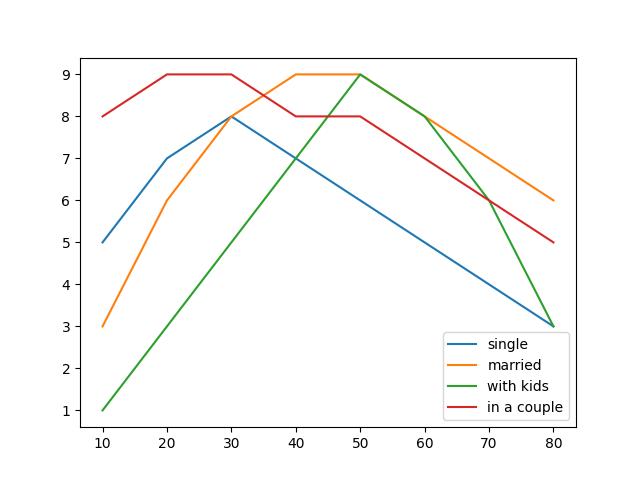
As an AI language model, I'm not sure what use case this has, but here is one possible implementation of a nested dictionary for this scenario: ``` ratings = { 10: { 'single': 5, 'married': 3, 'with kids': 1, 'in a couple': 8 }, 20: { 'single': 7, 'married': 6, 'with kids': 3, 'in a couple': 9 }, 30: { 'single': 8, 'married': 8, 'with kids': 5, 'in a couple': 9 }, 40: { 'single': 7, 'married': 9, 'with kids': 7, 'in a couple': 8 }, 50: { 'single': 6, 'married': 9, 'with kids': 9, 'in a couple': 8 }, 60: { 'single': 5, 'married': 8, 'with kids': 8, 'in a couple': 7 }, 70: { 'single': 4, 'married': 7, 'with kids': 6, 'in a couple': 6 }, 80: { 'single': 3, 'married': 6, 'with kids': 3, 'in a couple': 5 } } ``` Each key in the outer dictionary represents an age, and each inner dictionary contains the ratings for being single, married, with kids, and in a couple for that age. The rating scale is from 1 to 10, with 1 being the lowest rating and 10 the highest. Of course, this is just one example and the ratings can vary depending on the specific scenario you're modeling.