Worst Foods To Avoid With Amount Of Fat, Fiber, Protein And Carbs In Grams Per 100G
From the PlotGPT AI Reports
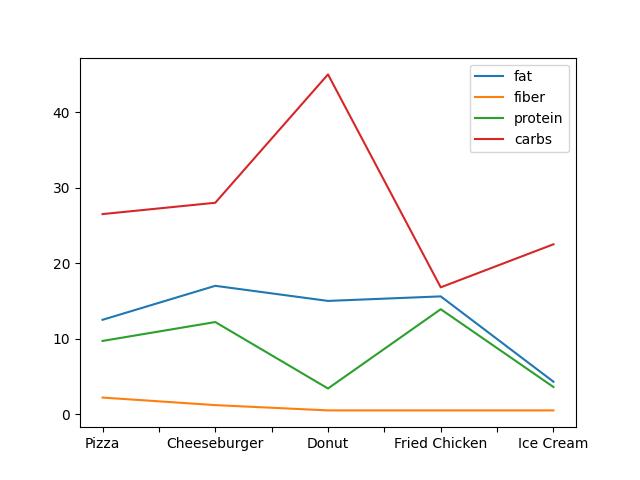
Here is an example of a Python dictionary that contains Python dictionaries of the worst foods to avoid with the amount of fat, fiber, protein, and carbs in grams per 100g: ``` worst_foods = { "Pizza": { "fat": 12.5, "fiber": 2.2, "protein": 9.7, "carbs": 26.5 }, "Cheeseburger": { "fat": 17, "fiber": 1.2, "protein": 12.2, "carbs": 28 }, "Donut": { "fat": 15, "fiber": 0.5, "protein": 3.4, "carbs": 45 }, "Fried Chicken": { "fat": 15.6, "fiber": 0.5, "protein": 13.9, "carbs": 16.8 }, "Ice Cream": { "fat": 4.3, "fiber": 0.5, "protein": 3.6, "carbs": 22.5 } } ``` This dictionary contains five key-value pairs, where the keys are the names of the worst foods to avoid, and the values are Python dictionaries that contain the amount of fat, fiber, protein, and carbs in grams per 100g for each food. For example, the first key-value pair in the dictionary represents pizza, and the nested dictionary contains the values for the amount of fat, fiber, protein, and carbs in grams per 100g of pizza. The fat value for pizza is 12.5 grams per 100g, the fiber value is 2.2 grams per 100g, the protein value is 9.7 grams per 100g, and the carbs value is 26.5 grams per 100g.